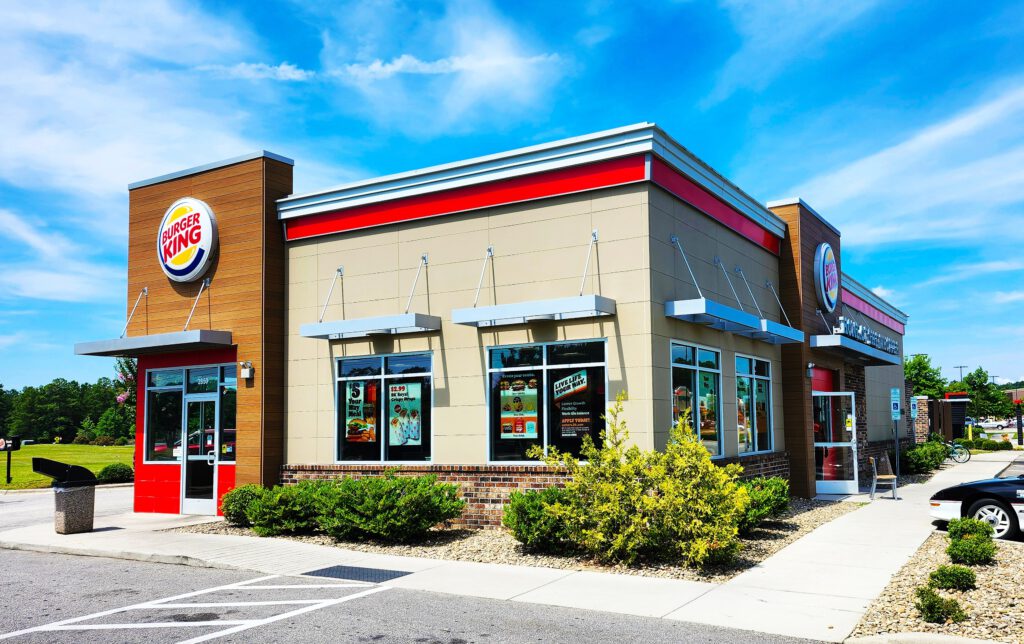
In the world of franchising, few strategic decisions are as impactful—or as misunderstood—as the move from operating company-owned locations to becoming a fully franchised, asset-light system. Burger King’s transformation into a nearly 100% franchised brand is one of the clearest and most instructive examples of this evolution.
For emerging and mid-market franchise brands working with Franchise Marketing Systems (FMS), this shift offers a powerful blueprint—not just for growth, but for long-term scalability, profitability, and enterprise value.
The Strategic Inflection Point: Why Operating Units Becomes a Limitation
Most businesses begin with company-owned locations. This is not just normal—it’s necessary. Operating units internally allows a brand to:
- Prove the concept
- Refine systems and processes
- Establish unit economics
- Build a replicable model
However, what works in the startup phase can become a constraint at scale.
Burger King experienced this firsthand. As it grew, the company faced the same challenges that many multi-unit operators encounter:
- Increasing capital requirements for new locations
- Operational complexity across geographies
- Margin pressure from labor, food, and overhead
- Inconsistent performance across company units
At a certain point, the question shifts from “How do we operate better?” to “Should we even be the operator?”
That’s where Burger King made its pivotal move.
The Refranchising Strategy: A Shift in Identity
Burger King’s decision to sell off company-owned stores was not simply a financial maneuver—it was a transformation in identity.
The brand moved from being a restaurant operator to becoming:
- A franchisor
- A brand manager
- A systems architect
This is a critical distinction for any business considering franchising.
At FMS, we often emphasize that franchising is not just about selling units—it’s about redefining what your business actually does.
When done correctly, the franchisor’s role becomes:
- Building and protecting the brand
- Creating scalable systems
- Supporting franchisee success
- Driving innovation and marketing
Burger King’s refranchising strategy allowed it to fully embrace this role.
The Power of the Asset-Light Model
One of the most important takeaways from Burger King’s evolution is the value of an asset-light model.
In a traditional operator model, growth requires capital:
- Real estate
- Construction
- Equipment
- Staffing
In a franchise model, growth is funded by franchisees.
This shift unlocks three major advantages:
1. Accelerated Expansion
Instead of growing linearly based on internal capital, franchised systems can scale exponentially.
Burger King leveraged franchisees—both domestic and international—to expand far beyond what corporate ownership alone would have allowed.
For emerging brands, this is one of the most compelling reasons to franchise: the ability to grow faster without over-leveraging the business.
2. Improved Financial Structure
Franchise systems generate revenue through:
- Royalties
- Franchise fees
- Marketing contributions
These are higher-margin, more predictable, and less operationally volatile.
Burger King’s shift dramatically improved its financial profile, turning it into a more stable and scalable enterprise.
For FMS clients, this is often a key milestone: transitioning from operational revenue to recurring, system-based revenue.
3. Risk Distribution
Operating restaurants—or any multi-unit business—comes with inherent risk.
By franchising, Burger King redistributed that risk to local operators, who are:
- Invested in their own success
- Closer to their markets
- More agile in day-to-day decision-making
This is one of the most powerful elements of franchising: aligning ownership with execution.
The Franchisee Advantage: Why Local Ownership Wins
One of the less discussed—but equally important—reasons Burger King leaned into franchising is the advantage of local ownership.
Franchisees bring:
- Market-specific knowledge
- Hands-on management
- Entrepreneurial urgency
This often results in stronger unit-level performance compared to corporate-managed locations.
At FMS, we consistently see that the best-performing franchise systems are those that empower franchisees while maintaining strong brand standards.
Burger King’s model reflects this balance: centralized brand control with decentralized operational execution.
Lessons for Emerging Franchise Brands
While Burger King operates at a global scale, the principles behind its strategy are directly applicable to growing franchise systems.
Lesson 1: Build for Replication Early
Before you franchise, your model must be documented, trainable, and repeatable.
Burger King’s early challenges with inconsistency highlight what happens when systems are not fully standardized.
FMS works with brands to ensure that operations, marketing, and training are structured for scalability from day one.
Lesson 2: Know When to Let Go of Control
Many founders struggle with the idea of giving up operational control.
But holding onto company-owned units for too long can:
- Limit growth
- Tie up capital
- Distract from strategic priorities
Burger King’s success came from recognizing that its highest value was not in flipping burgers—but in building the system behind them.
Lesson 3: Focus on the Right Metrics
In an operator model, success is measured by unit-level profitability. In a franchise model, success shifts to:
- System-wide sales
- Franchisee profitability
- Royalty growth
- Brand strength
This mindset shift is critical.
At FMS, we guide clients through this transition—helping them understand how to measure and manage a franchise system effectively.
Lesson 4: Invest in Franchisee Success
A franchisor’s growth is directly tied to the success of its franchisees.
Burger King’s ongoing strategy of acquiring underperforming units, improving operations, and refranchising to stronger operators demonstrates a commitment to system health.
For emerging brands, this reinforces a key principle: You are only as strong as your franchisees.
Learn more about support from Chris Conner with Franchise Marketing Systems:

Lesson 5: Think Long-Term Enterprise Value
Perhaps the most important takeaway is how franchising impacts enterprise value.
Asset-light, franchise-driven businesses are often valued higher because they offer:
- Predictable revenue
- Scalable growth
- Lower operational risk
Burger King’s transformation positioned it as a global brand platform rather than a restaurant chain.
This is the ultimate goal for many FMS clients: building a business that is not just profitable—but highly valuable.
The Balance: Control vs. Scale
It’s important to note that franchising is not a one-size-fits-all solution.
The challenge is finding the right balance between brand control and franchisee autonomy. Too much control can stifle growth. Too little can damage the brand.
Burger King’s journey—especially its early struggles—illustrates the importance of evolving this balance over time.
Franchising as a Strategic Evolution
Burger King didn’t start as a fully franchised system. It evolved into one.
That evolution was driven by:
- The realities of scale
- The need for capital efficiency
- The recognition of where the brand’s true value lies
For businesses working with Franchise Marketing Systems, the takeaway is clear: franchising is not just a growth strategy—it’s a strategic evolution.
It requires a shift in mindset from operator to franchisor, from location-focused to system-focused, and from short-term revenue to long-term scalability.
Burger King’s story is not just about fast food—it’s about building a platform for growth. And for brands ready to scale, that platform can be the difference between incremental success and exponential expansion.
For more information on how to franchise a business and franchise strategies, email Chris Conner: [email protected] or visit the FMS Franchise Site: www.FMSFranchise.com