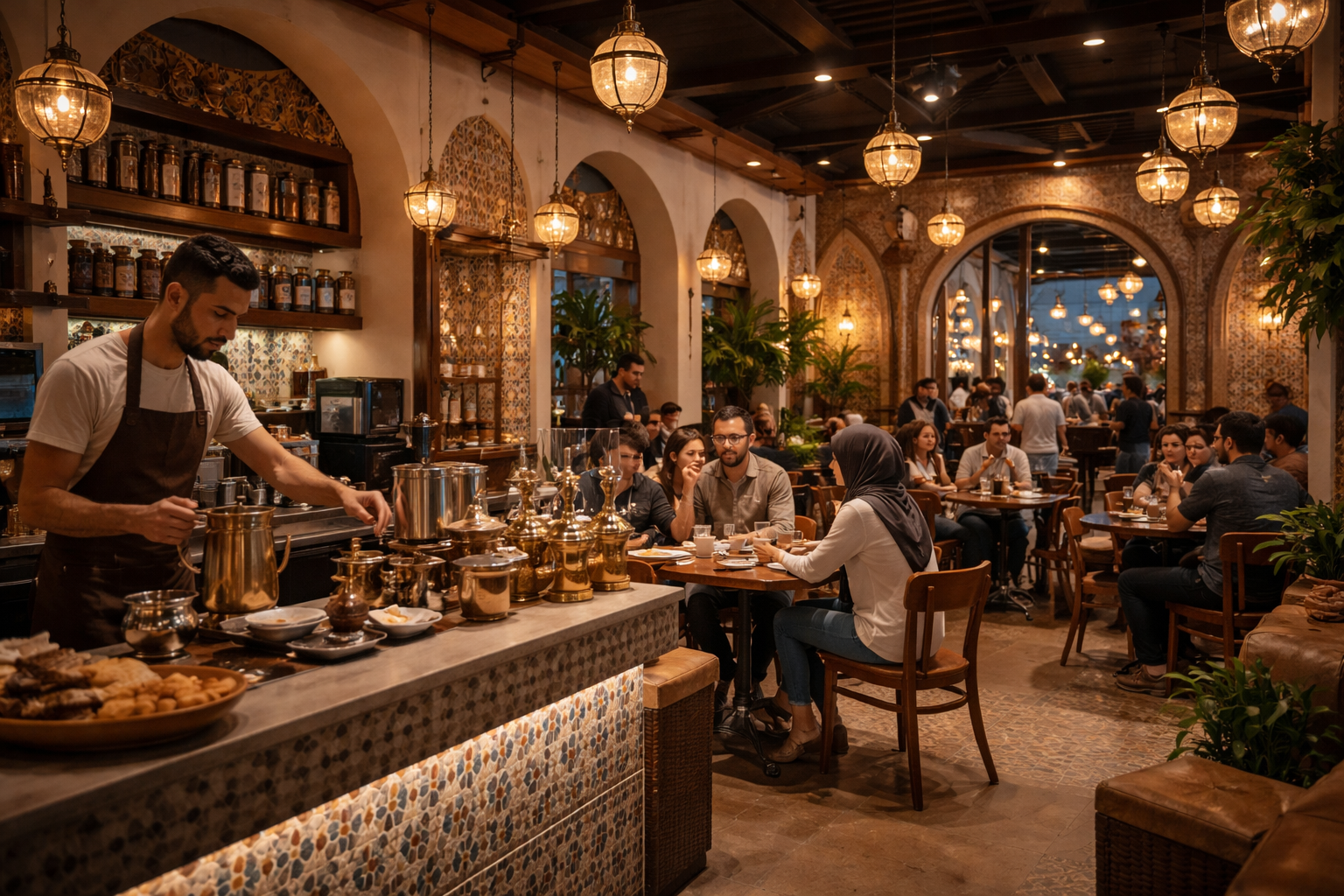

Consumers are craving global flavors more than ever, and the foodservice industry is responding. What used to be “ethnic food” as a niche category is now mainstream. Customers want authentic regional cuisine, new flavor experiences, and brands with a story. That shift is powering a new era of global food franchise growth, where fast-growing, globally inspired restaurant and café concepts are using franchising and multi-unit development to expand across cities, states, and countries.
At the same time, operators and franchise investors are drawn to ethnic concepts because they offer clear differentiation in crowded categories. A signature protein, a specific regional flavor profile, a culturally rooted menu, and strong community affinity help these brands stand out. The result is a growing pipeline of concepts scaling across the U.S. and into international markets.
Want a deeper look at how brands expand beyond borders? Read this guide on managing international franchise growth.
Below is a practical look at:
- What’s driving demand
- Why ethnic food brands scale successfully
- Real-world examples of brands expanding through franchise growth
The Macro Trend: Global Flavors Are Becoming the Default
Food culture has shifted for structural reasons, not just because a few items trend on TikTok.
1. Consumers Actively Seek Global Fare and Bold Flavor Profiles
Industry research consistently shows that global flavors are becoming a core menu strategy, not a side feature. Technomic publishes dedicated research on “Global Fare on U.S. Menus,” tracking operator and consumer shifts toward international cuisine.
2. Menu Data Shows Global Cuisines Expanding Rapidly
A Technomic Ignite analysis summarized by the Specialty Food Association highlights how cuisines like poke, ramen, and Korean concepts exploded in unit counts from the mid-2010s through 2022. That kind of growth signals a widening consumer comfort zone and creates runway for franchise expansion.
3. The Ethnic Food Market Will Keep Growing
Market research firms project continued growth across ethnic food categories. Even with varying definitions, the direction is clear. Demand for global flavors is expanding, supporting long-term global food franchise growth.
Why Ethnic Food Concepts Franchise Well
Not every great local restaurant becomes a scalable franchise. The ones that do share common traits.
1. A Tight Menu With a Signature Product
Successful brands standardize a few winners. A flagship protein, a signature sauce, a core bowl or sandwich format, and a small set of sides. Menu simplicity supports consistency without sacrificing authenticity.
2. Strong Brand Identity and Cultural Story
Ethnic brands often have a built-in narrative rooted in heritage, origin, or family tradition. That story fuels marketing and builds loyalty in new markets.
3. Repeatability and Supply Chain Readiness
The fastest-growing brands either:
- Simplify ingredients so they can source nationally, or
- Build a distribution strategy early with co-packers, approved vendors, or centralized production
4. Broad Consumer Accessibility
The highest-growth concepts translate global flavors into approachable formats: bowls, wraps, fried chicken, bakery cafés, and tea beverages. Familiar structures reduce trial friction.
5. Unit Economics Supported by High Frequency
Winning concepts align with repeat behaviors such as lunch bowls, late-night street food, coffee and tea, or snackable items.
If you’re building internationally, here’s a strong breakdown on selling franchises to international buyers.
Examples of Global Food Brands Scaling Successfully
These examples show how diverse cuisines are fueling global food franchise growth across QSR, fast casual, café, beverage, and specialty formats.
1. Jollibee – Filipino-Inspired QSR
Jollibee evolved from a culturally rooted brand into a global powerhouse. Reuters reports strong international growth, and the brand has surpassed 100 stores in the U.S. and Canada.
Why it works
- Distinctive anchor product
- Strong community loyalty
- Scale advantages from a global parent company
What it signals
Ethnic brands can become category leaders, not just regional novelties.
2. The Halal Guys – Street Food to System
The Halal Guys transformed a beloved street format into a franchise model. In 2025, the brand expanded its franchising initiative to accelerate domestic and international growth.
Why it works
- Simple, high-throughput menu
- Strong authenticity
- Universal format
What it signals
Halal and Middle Eastern concepts are moving into mainstream demand.
3. Paris Baguette – Global Café Expansion
Paris Baguette blends Korean roots with French-inspired café culture and targets 1,000 U.S. locations.
Why it works
- High-frequency dayparts
- Visually compelling products
- Flexible real estate formats
What it signals
Global growth is not limited to savory cuisine. Bakery and beverage brands scale fast.
4. Kung Fu Tea – Beverage-Led Growth
Kung Fu Tea reports 440+ locations across the U.S.
Why it works
- Highly repeatable product
- Strong social appeal
- Lower kitchen complexity
What it signals
Standardized beverages drive rapid franchise expansion.
5. Pollo Campero – Regional Heritage, National Rollout
Pollo Campero continues expanding in the U.S., leveraging familiar chicken formats with cultural differentiation.
Why it works
- Mass-market category
- Strong diaspora support
- QSR-friendly operations
What it signals
Latin concepts beyond tacos and burritos will define the next decade.
6. Japanese Concepts and Format Innovation
Brands like Kura Sushi combine cuisine with experience. Conveyor service and tech-enabled ordering create differentiation beyond menu items.
What it signals
Global concepts win faster when the experience is hard to copy.
Explore another fast-growing category in Indian food franchise expansion.
What Makes a Global Food Franchise Sustainable
- Protect authenticity while simplifying operations
- Train for consistency, not complexity
- Support marketing with cultural intelligence
- Build vendor networks early
- Design for mainstream repeat visits
The Big Takeaway
Global food franchise growth is not a fad. Consumer demand has permanently shifted toward authentic, globally inspired food. Brands that win:
- Offer an authentic yet accessible signature product
- Operate with a streamlined, repeatable model
- Build the supply chain and training infrastructure to scale
For more information on franchising an international food service brand, contact Franchise Marketing Systems.
To find a franchise brand, contact Franchise Conduit.
Visit Buy a Canadian Franchise to explore brands.