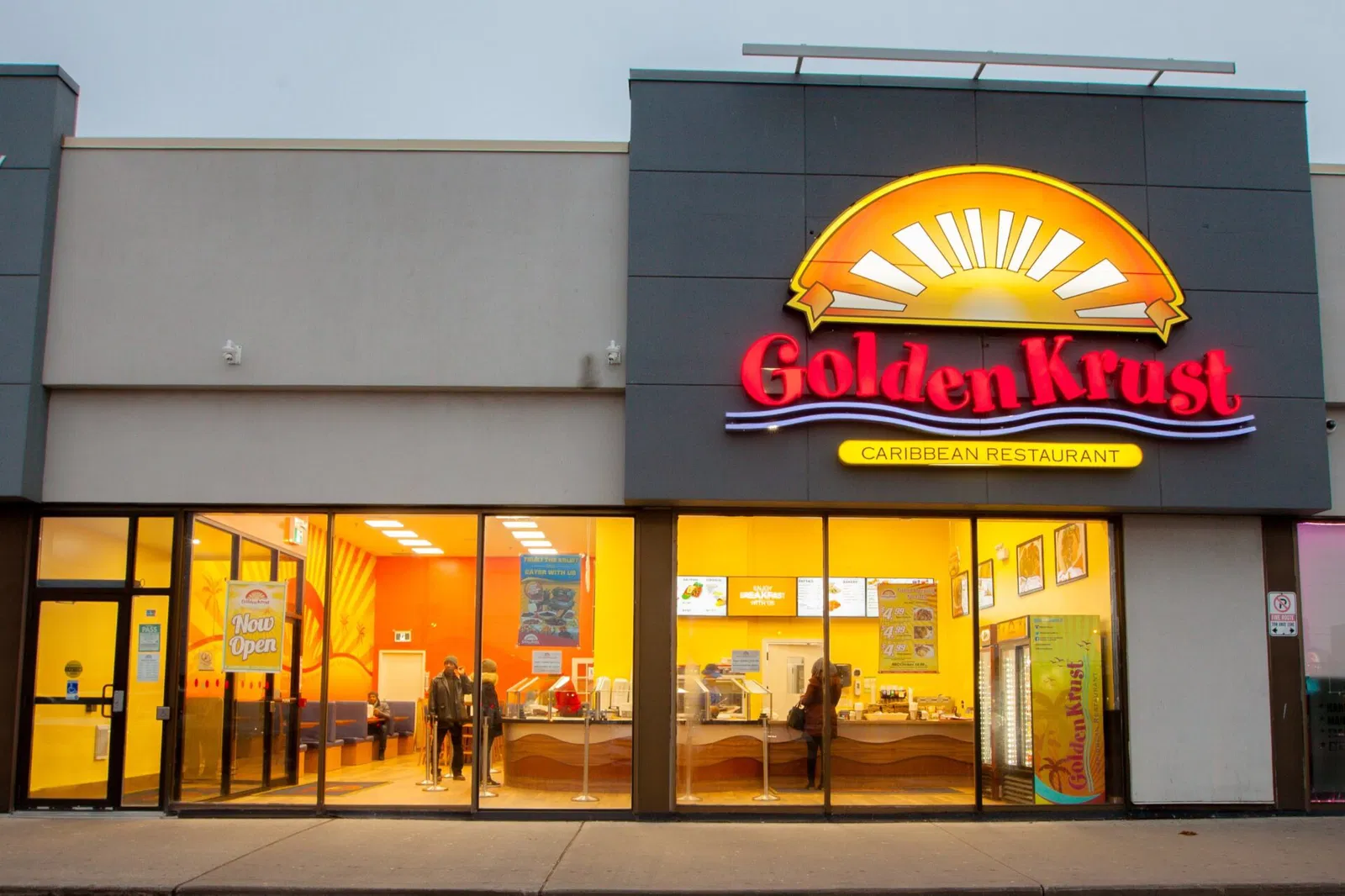
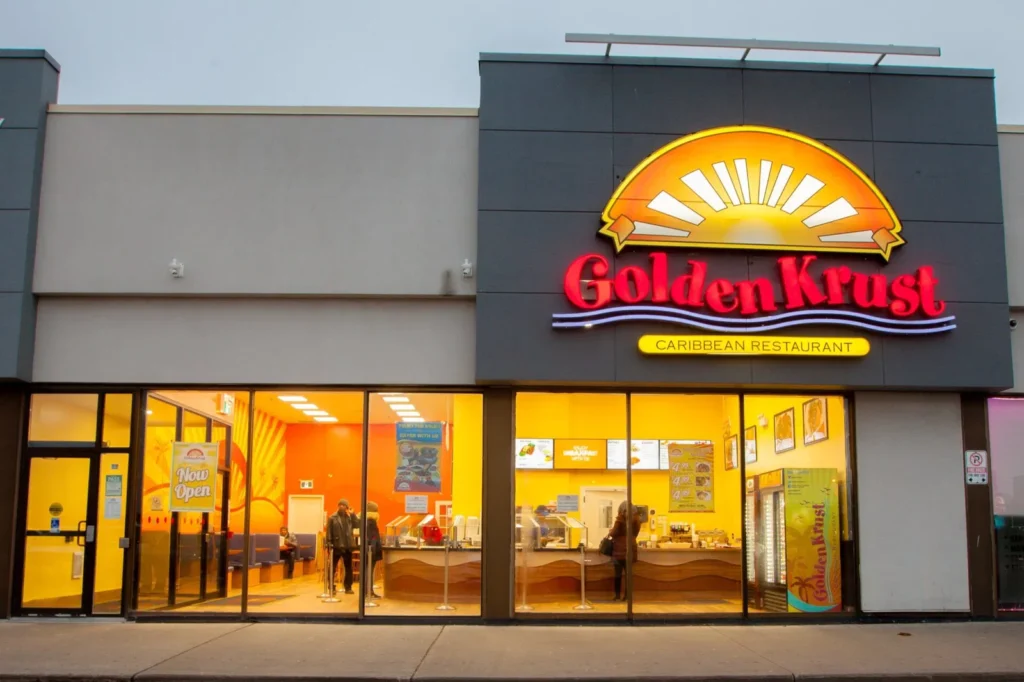
Golden Krust is one of the most recognized Caribbean quick-service restaurant (QSR) brands in the United States—best known for bringing Jamaican patties and Caribbean comfort food into mainstream American neighborhoods. What makes Golden Krust particularly notable in franchising is that it grew into a multi-unit system while also building a manufacturing backbone that helped standardize product quality and unlock additional revenue channels beyond the restaurants.
Today, Golden Krust operates a network of 125+ restaurants in North America (with the precise count varying by source and timing), and its franchising story is rooted in an immigrant-family business that scaled from a single Bronx location into one of the largest Caribbean restaurant franchise systems in the U.S.
This article explores Golden Krust’s origin story, the milestones that pushed it toward franchising, the structure of the franchise model, and why the brand became a case study in scaling an ethnic cuisine concept through replication.
From Jamaican Bakery Roots to a Bronx Breakthrough
Golden Krust’s origin is closely tied to the Hawthorne family’s baking and food heritage. The company’s founder story is often framed around the idea that Golden Krust was an extension of the family’s earlier bakery foundation in Jamaica—specifically the legacy of Hawthorne & Sons Bakery in St. Andrew, Jamaica—before the concept took shape in New York.
In 1989, Golden Krust opened its first U.S. restaurant in the Bronx, New York, marking the start of what would become a Caribbean food chain and a packaged-food manufacturing operation. Multiple sources consistently cite 1989 as the founding year and the Bronx as the launch market.
The early value proposition was straightforward but powerful:
- Deliver a recognizable set of Caribbean staples—especially Jamaican patties—in a consistent, fast-service format.
- Meet local neighborhood demand in New York City communities where Caribbean cuisine was already culturally important.
- Build a brand identity that could extend beyond a single community by balancing authenticity with accessibility.
This blend—authentic core product + approachable service format—became a recurring theme in Golden Krust’s growth.
The Manufacturing Leap: A Key Step Toward Franchising
Many restaurant concepts scale through franchising alone. Golden Krust scaled through franchising and manufacturing. That matters because manufacturing can serve as a “quality engine,” ensuring product consistency across multiple locations—especially when a system’s signature item is a standardized baked or prepared good.
Golden Krust’s own corporate history highlights a pivotal year in 1993, when the company relocated its manufacturing operations to the South Bronx, later purchasing significant property on Park Avenue as capacity grew.
External business history summaries describe the development of a sizeable Bronx production facility by the late 1990s, emphasizing that the chain had grown significantly by that time and that manufacturing supported its expansion and broader market appeal.
This manufacturing capability helped Golden Krust solve several common franchising problems:
- Product Consistency: A controlled production process makes it easier for franchisees to deliver the same core item (the patty) regardless of location.
- Supply Chain Control: The brand could standardize key ingredients and processes rather than relying entirely on fragmented local sourcing.
- Brand Expansion Beyond Restaurants: A manufacturing operation supports retail distribution opportunities, extending brand reach into grocery and other channels (which the company promotes through its retail product line).
In other words, manufacturing wasn’t just an operational footnote—it was a strategic platform that made franchising more scalable.
How and Why Golden Krust Shifted Into Franchising
Golden Krust’s own company narrative describes the success of its early growth in New York and notes that the family was encouraged to franchise the concept. The brand states it became the first Caribbean-owned business in the U.S. to be granted a franchise license, and it points to rapid early multi-unit growth in New York City by the mid-1990s.
Franchise-industry directories commonly list Golden Krust as franchising since 1996, reflecting the period when the system began formalizing franchise offerings.
Business history sources add important texture: by mid-1999, the chain had reportedly reached 35 units, with a significant portion being franchised stores—evidence that franchising played a meaningful role early in the brand’s scaling phase.
Learn more about when the right time might be to franchise your business.
From a strategic standpoint, Golden Krust’s move into franchising makes sense for three reasons:
1. It was built on a signature product with broad appeal
Jamaican patties are portable, craveable, and operationally franchisable (they can be baked and held, integrated into combos, and served quickly). That’s a good foundation for unit replication.
2. Demand existed beyond one neighborhood
What starts as “community food” can become “mainstream comfort food” when the brand makes access easy. Historical summaries describe Golden Krust expanding appeal beyond its core Caribbean base over time by meeting broader neighborhood tastes while preserving its signature identity.
3. The franchise model leveraged a centralized production backbone
Franchising can strain quality. Manufacturing can offset that strain.
The Golden Krust Franchise Model: What Franchisees Operate
Golden Krust franchisees operate Caribbean-style restaurants offering a menu built around patties and classic Caribbean dishes—often including jerk chicken and other island staples. Franchise summaries and FDD-based sources describe the franchise business as a Caribbean-style restaurant featuring Jamaican patties, jerk chicken, and bakery products.
The model generally fits in the QSR-to-fast-casual segment, with:
- Counter-service ordering
- High emphasis on takeout and off-premise business
- Menu built around a recognizable “hero product” (the patty), with meal options expanding ticket size
Investment and fee structure (high-level)
While exact numbers should always be confirmed in the current Franchise Disclosure Document, publicly available FDD previews and franchise analysis sources indicate:
- A franchise fee that is commonly cited around $40,000 for certain restaurant formats (noting Golden Krust has referenced “traditional” and “Jerk ‘N Patties” restaurant formats).
- Total investment ranges in the hundreds of thousands depending on format, location, and buildout. The total investment range is $264,100 to $687,000 for a Golden Krust Jerk ‘N Patties restaurant format.
(Those figures are informational and can change; franchise candidates should rely on the franchisor’s current FDD and counsel.)
How the Franchise System Creates Value for Owners
Golden Krust’s model offers franchisees several classic franchise advantages, reinforced by the brand’s manufacturing and heritage:
1. Brand recognition in a distinct category
Caribbean QSR is a niche relative to burgers and pizza, but Golden Krust is one of the most recognizable names in the segment in the U.S. That recognition can reduce the “education burden” for franchisees in markets with existing Caribbean communities—and can also attract broader audiences looking for something differentiated.
2. Signature product + menu clarity
Brands with a clear “hero item” often scale better because marketing is simple and operations are repeatable. Golden Krust’s identity is strongly tied to patties, which are also a product format that travels well and fits modern convenience demand.
3. Manufacturing-driven consistency
A centralized product platform can support:
- consistent customer experience
- faster training and onboarding
- fewer operational variables at the store level
This is one reason some food franchises with proprietary manufacturing become more resilient as they expand.
4. Multi-channel brand presence (restaurants + retail products)
Golden Krust actively promotes retail products as part of its consumer offering, reinforcing brand familiarity even outside restaurant visits.
For franchisees, consumer familiarity—whether it comes from restaurant visits or store-bought patties—can support faster trial and repeat.
Milestones That Shaped the Brand’s Franchise Evolution
Golden Krust’s “Our Story” timeline highlights key events that show how the brand continued to modernize and market itself while expanding:
- Founder Lowell Hawthorne published a memoir (“The Baker’s Son”) in 2012
- The company celebrated 25 years in 2014 and launched National Jamaican Patty Day in 2015
- The brand expanded into Canada with restaurants in Ontario in 2018
- It added third-party delivery platforms and introduced a loyalty app in 2020, aligning with broader QSR digitization
These kinds of milestones matter in franchising because they show whether a brand is building modern demand engines (delivery, loyalty, marketing events) rather than relying purely on legacy foot traffic.
Current Footprint and Growth Ambitions
Golden Krust currently has over 125+ restaurants in North America.
In early 2026, it was reported that Golden Krust announced an aggressive plan to open 50 new franchise restaurants in the U.S. over five years, signaling a renewed push into expansion and new markets.
For franchise observers, that kind of statement suggests the brand sees:
- Continued demand for Caribbean QSR
- Room to grow beyond legacy strongholds (especially New York-area markets)
- A scalable franchise pipeline supported by manufacturing, product identity, and brand story
Why Golden Krust’s Franchise Story Matters
Golden Krust is a compelling franchise case study because it demonstrates how a culturally specific cuisine can grow into a mainstream franchise system when it combines four elements:
1. A product with mass-market potential
The patty is approachable even for consumers unfamiliar with Caribbean cuisine. It’s the “gateway” product that introduces the brand.
2. Operationally franchisable food
The menu can be executed quickly and consistently—critical for franchisee success.
3. A supply chain and manufacturing core
Central production can support system-wide quality as the franchise footprint grows.
4. A story-driven brand with cultural authenticity
The Hawthorne family origin story—paired with recognizable milestones and community-oriented messaging—creates a brand narrative that can travel with the franchise system.
The Golden Krust Franchise System in Perspective
Golden Krust began in 1989 in the Bronx and scaled into a leading Caribbean franchise brand by combining restaurant expansion with a manufacturing platform that supported product consistency and brand reach. Over the decades, it formalized franchising (often cited as beginning in the mid-1990s), expanded the brand’s footprint across multiple U.S. states and into Canada, and invested in modern demand drivers like delivery and loyalty.
Now, with publicly reported plans to add 50 new U.S. locations over five years, Golden Krust appears to be entering another growth chapter—one that could broaden the Caribbean QSR category and create additional opportunities for multi-unit franchise operators.
For more information on how to franchise your business, contact FMS Franchise.