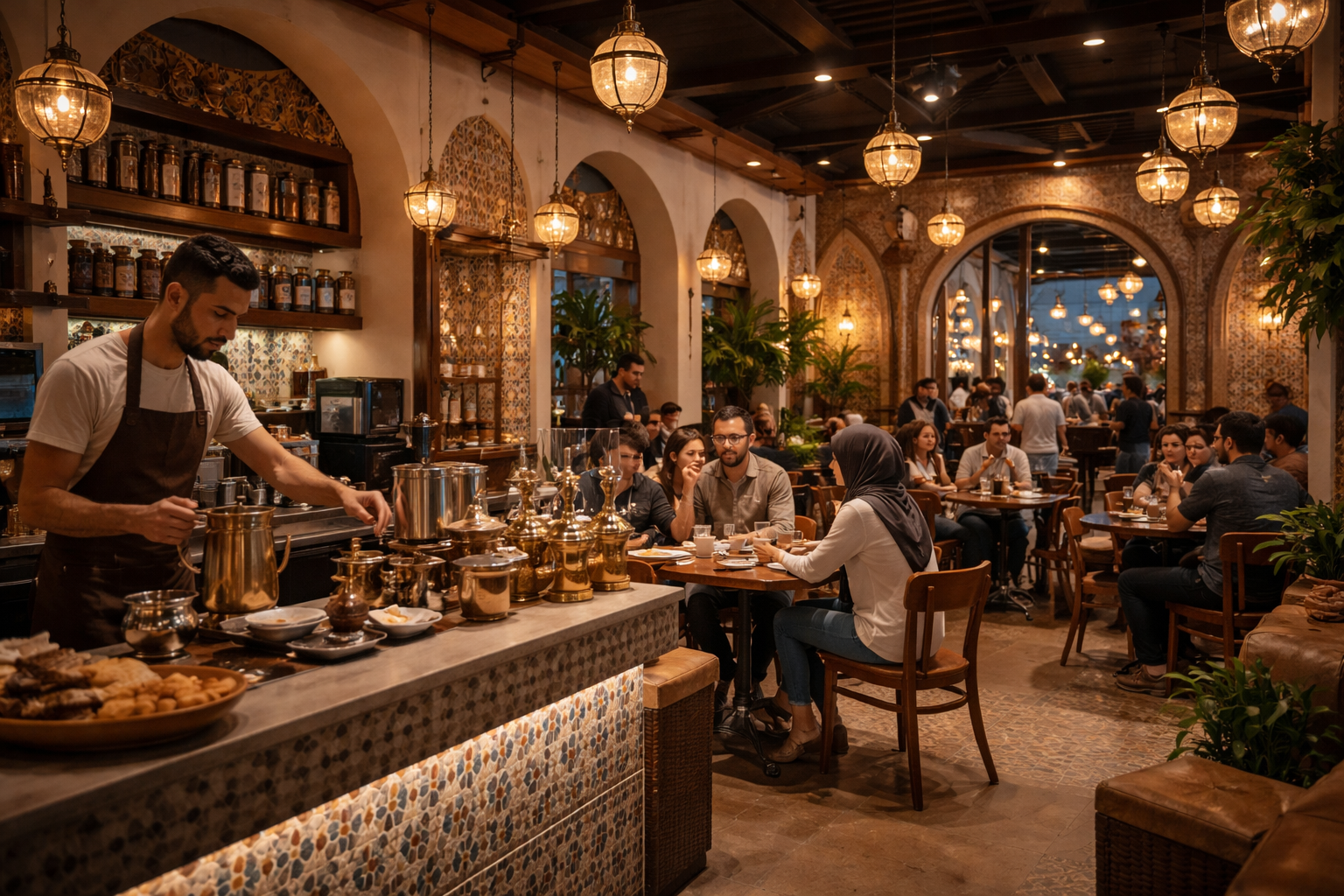
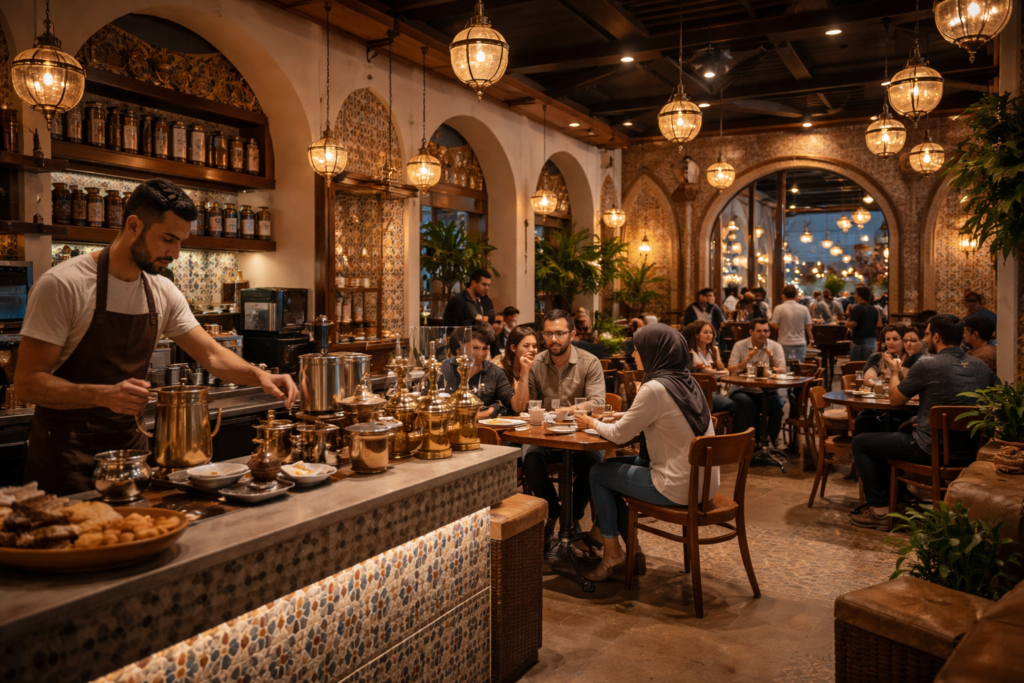
Yemeni Coffee is having a moment in the United States. A decade ago, most Americans knew “mocha” as a flavored latte, not as a reference to Yemen’s historic port city that helped introduce coffee to global trade. Today, that story is being rediscovered in real time. Yemeni coffeehouse brands, and more broadly, ethnic coffee concepts rooted in heritage, hospitality, and distinctive flavor traditions, are expanding rapidly across U.S. cities and suburbs. The momentum is strong enough that national outlets are now describing a wave of hundreds of Yemeni coffee shops opening across the country.
This is not just a new café trend. It is a market shift driven by consumer appetite for global flavors, late-night social café culture, premiumization in coffee, and the emergence of scalable franchise-style systems built by immigrant entrepreneurs. In this article, we break down the Yemeni coffee segment, why it is hitting now, what brands are shaping the category, and how operators and investors can evaluate the opportunity.
Yemen’s Outsized Role in Coffee History and Why That Matters for Branding
Yemen’s coffee identity is unusually powerful because it is not a modern invention. It is rooted in origin story.
The coastal Yemeni town of Mocha (Al Mokha) was historically famous as Arabia’s chief coffee-exporting center, and the term “mocha” entered European languages as a synonym tied to that coffee trade. This heritage gives Yemeni coffee brands something many coffee concepts struggle to manufacture: authentic narrative. It is not coffee with a theme. It is coffee with a historically credible point of view, origin, trade, ritual, and hospitality.
That authenticity matters because consumers increasingly buy experiences, not just beverages. Yemeni cafés often combine:
- Spice-forward coffee and tea traditions such as cardamom, ginger, saffron, and cinnamon
- Pastries and desserts tied to regional preferences
- Design elements that feel more like a lounge or community hub than a quick coffee stop
The Bigger Tailwind: Coffee Growth and Premiumization in the U.S.
The Yemeni segment is rising inside a broader coffee market that continues to grow and premiumize.
One recent market forecast projects the U.S. coffee market at about $25B in 2026, growing to roughly $31B by 2031, driven in part by specialty adoption and premium positioning. While forecasts vary by methodology, the direction is consistent. Americans are not quitting coffee. They are trading up in quality, experience, and identity.
That is a perfect environment for heritage coffee concepts:
- Single-origin storytelling
- Differentiated flavor profiles
- Elevated café design
- Specialty beverages with cultural roots
And it is not only Yemeni brands. The success of culturally anchored cafés such as Korean bakery cafés, bubble tea, and Latin-owned specialty roasters points to a wider consumer demand for ethnic and global café experiences.
Why Yemeni Coffeehouses Are Scaling So Quickly in the U.S.
1. A Café That Doubles as a Community “Third Place”
Yemeni cafés often stay open late and operate as social gathering spaces, an alternative to alcohol-centered nightlife. These cafés are places people return to frequently, with a hospitality-forward atmosphere and unique desserts that become part of the draw.
Strategically, this matters. Late-night hours and hangout density can lift sales beyond the morning rush patterns that define traditional coffee chains.
2. A Flavor Profile That Feels New Without Being Risky
Yemeni beverages introduce spice notes such as cardamom, ginger, saffron, and honey in ways that still feel familiar to latte and tea consumers. That new-but-accessible positioning helps brands cross from diaspora communities into mainstream traffic.
3. Premium Cues With Approachable Pricing
Many Yemeni café menus communicate premium through presentation, décor, and ingredients, even when the underlying product cost is manageable. That is a strong model in a premiumizing market.
4. Franchising and Multi-Unit Development Are Becoming Common
This is no longer just independents opening one shop. Multiple Yemeni coffee brands are expanding through franchising or franchise-like development, building repeatable store formats, menu systems, and training models.
For franchisors exploring similar growth paths, resources like how to franchise your business and how to recruit minority franchisees effectively offer practical insight into building inclusive, scalable franchise systems.
Brands and Concepts Shaping the Yemeni Coffee Category
The Yemeni coffee wave includes both large-format chains and fast-growing regional players.
Qahwah House
Food & Wine describes Yemeni coffee as “having a moment” and highlights Qahwah House as a key chain that has grown to dozens of locations in the U.S. Local reporting continues to track new openings and expansion into additional states.
Haraz Coffee House
Haraz is frequently cited as one of the leading growth engines in this segment. It has expanded from early beginnings to dozens of locations with a large pipeline under development, moving beyond its Michigan roots into broader regional footprints.
Qamaria Yemeni Coffee Co.
Qamaria appears repeatedly in coverage of new store openings and expansion activity and is often listed among the chains driving the broader Yemeni café wave.
Mokafé and Other Emerging Brands
New York-area reporting has covered Mokafé openings and the growing Yemeni coffee presence. Other Yemeni-origin or Yemeni-inspired operators are also expanding across multiple states.
Port of Mokha
While not a café chain in the same mold, Port of Mokha helped elevate Yemen’s specialty coffee narrative globally, reviving the country’s coffee legacy and connecting directly with farmers.
These success patterns echo broader themes found in success stories in franchising from minority entrepreneurs and celebrating minority-owned franchise success stories, where heritage-driven brands often build unusually loyal followings.
Takeaway: This is not a single-brand story. It is a category wave with multiple scalable players and premium counterparts that elevate awareness for Yemeni-origin coffee overall.
The Market Opportunity
1. Suburban Retail With Evening Traffic
Many Yemeni cafés perform well in strip centers and mixed-use areas where people want a third place at night.
2. Diverse Metros, Then Secondary Markets
Early growth often starts in diaspora-heavy metros, then moves into broader markets such as North Carolina and Texas.
This mirrors trends explored in the growth of minority-owned franchises, where brands often prove themselves locally before expanding into mainstream markets.
3. Premium Menus Without Full Kitchen Complexity
Many concepts deliver a premium feel through beverages and desserts without complex kitchens, improving scalability.
For prospective operators evaluating entry points, how to choose what franchise to invest in provides a useful framework for assessing concepts like these.
The Bottom Line on Yemeni Coffee Franchises
Yemeni coffee has moved from heritage niche to fast-scaling U.S. café segment. National reporting describes hundreds of Yemeni coffee shops opening across the country. At the same time, the broader coffee market continues to grow and premiumize, supporting a long runway for culture-forward concepts.
The opportunity is real. This is not only about beans. It is about experience, hospitality, authenticity, and repeatable systems.
For more information on how to franchise your coffee business, visit Franchise Marketing Systems.
To explore coffee franchise opportunities, visit Franchise Conduit.